

Dog Grooming Routine: Simple System for Healthier, Happier Pets 2025
Dog Grooming Routine: A Simple System for Healthier Pets
You know the look. Bright eyes, soft coat, relaxed posture. A well-groomed dog moves with ease and seems happier. Picture yourself brushing your dog on a quiet evening, then enjoying a walk without the usual scratching or shedding. A simple dog grooming routine can deliver that, and it does more than help your home stay clean. It supports health, spots problems early, and strengthens your bond.
This guide breaks down the benefits, the exact steps, and practical tips. If you want a routine that fits your schedule and keeps your dog comfortable, you’re in the right place.
Why a Regular Dog Grooming Routine Boosts Your Pet's Health and Happiness
Grooming is not vanity. It is preventive care. A steady schedule reduces mats, controls shedding, and keeps skin clean. It also helps you notice small changes before they become big problems. Think of it as a quick weekly health audit, paired with daily habits that take only minutes.
Veterinary groups report that routine checks catch ear infections, dental disease, and skin issues earlier, which supports longer, healthier lives. While numbers vary by breed and age, early detection leads to faster, less costly care and less stress for your dog.
- Less itching and irritation: Brushing removes dirt, loose hair, and mats that pull on skin.
- Cleaner skin and coat: Regular baths reduce oils and bacteria that trigger odor and discomfort.
- Fewer surprises: You feel for lumps, see redness, and smell changes that signal trouble.
- Lower shedding in the home: Consistent brushing collects hair before it hits your floors.
- Calmer, happier dog: Grooming becomes positive attention, which reduces anxiety.
A dog grooming routine can be simple. Ten minutes a day and a focused weekly session is enough for most dogs. Busy owners can maintain health and comfort with a plan that fits real life.
Prevents Painful Skin and Coat Problems
Mats hurt. They pinch skin with every step, trap moisture, and invite infection. Brushing lifts loose hair and spreads natural oils for a smooth, protective coat. Bathing removes grit and allergens that cause scratching. Pick gentle, dog-safe shampoo without strong scent or harsh sulfates, and rinse well to avoid residue.

Helps Spot Health Issues Early
Hands-on care helps you notice change fast. You might find a pea-sized lump, a tender spot, sticky ears, or an odd smell from the mouth. Caught early, most issues are easier to treat. That peace of mind is worth the habit. Build a quick scan into your weekly routine, and keep notes if you spot a pattern.
Strengthens Your Bond with Your Dog
Grooming is focused time. Your dog learns to trust your touch and follow cues. Keep sessions short, add praise, and pair new steps with treats. Over time, grooming becomes a ritual that reduces stress and makes vet visits easier.
Step-by-Step Guide to Building an Effective Dog Grooming Routine
A reliable dog grooming routine is a system. Set your tools, set your schedule, and follow the same steps. Adjust by breed, coat type, and activity level. The goal is to keep it simple, safe, and repeatable.
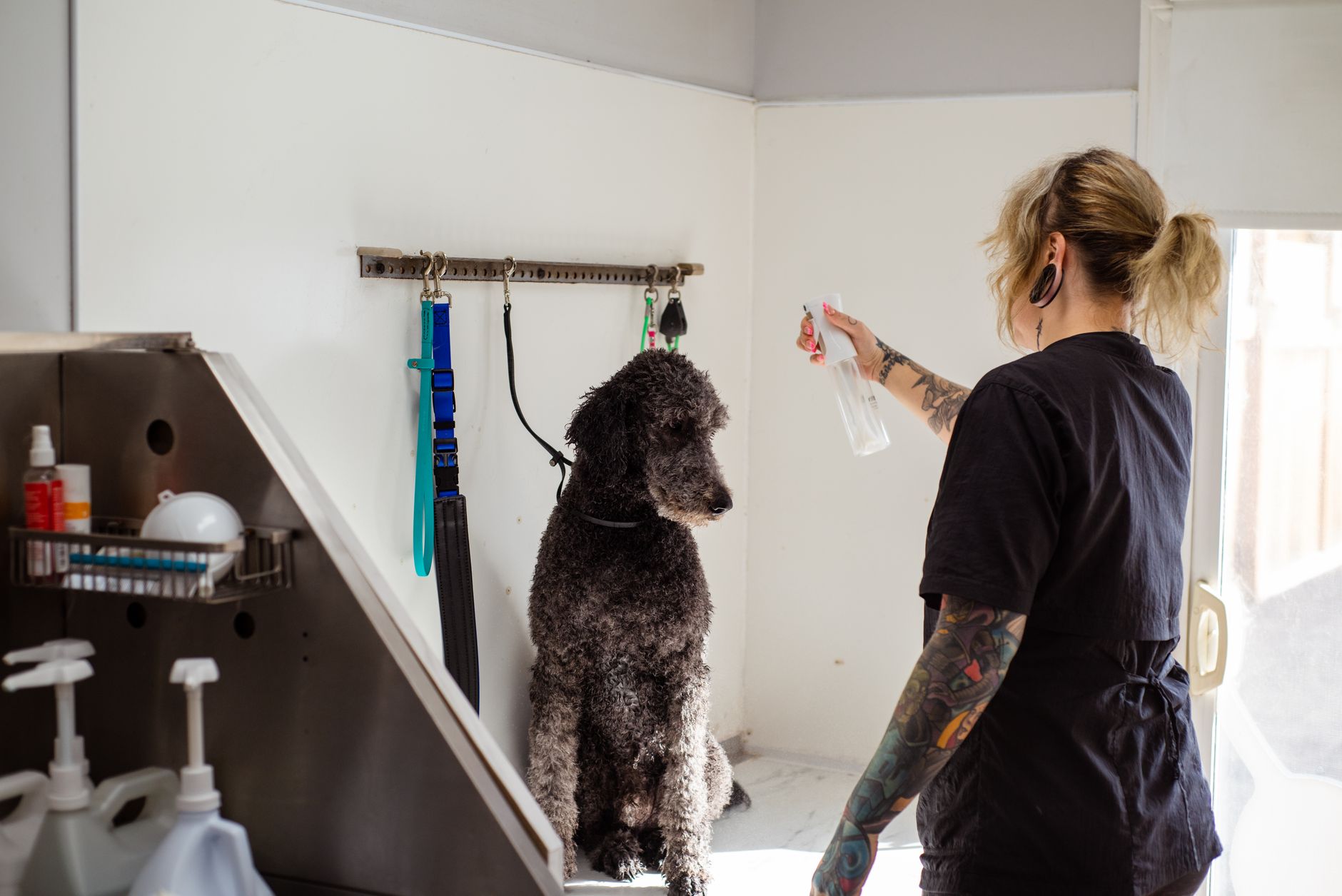 Photo by Goochie Poochie Grooming
Gather Your Grooming Tools and Set a Schedule
Start with the basics:
- Brushes: Slicker for long or curly coats, bristle or rubber curry for short coats, wide-tooth comb for detangling.
- Shampoo and conditioner: Dog-safe, mild, fragrance-light.
- Nail clippers or grinder: Choose a size that fits your dog.
- Ear cleaner: Vet-approved solution and cotton pads.
- Toothbrush and enzymatic toothpaste: Dog-safe only, never human toothpaste.
- Drying gear: Absorbent towels, low-heat dryer if needed.
Sample routine:
- Daily: Quick brush for 2 to 5 minutes, teeth brushing.
- Weekly: Nail check, ear check, paw and skin inspection.
- Monthly: Bath, full groom, trim as needed.
- Adjust for puppies, seniors, and active dogs.
Brushing Your Dog's Coat for Shine and Comfort
Match technique to coat:
- Short coats: Use a rubber curry or bristle brush in circular strokes, then smooth. Three to four times a week reduces shedding.
- Double coats: Use a slicker and undercoat rake, working in sections. Go with the hair growth. Two to three times a week during shedding season.
- Long or curly coats: Detangle with a comb first, then a slicker. Daily light brushing prevents mats behind ears, under legs, and around the collar.
Keep pressure light. Over-brushing can irritate skin. Aim to spread natural oils, remove loose hair, and check for burrs or fleas.

Photo by Elina Volkova:
Safe Bathing and Drying to Keep Skin Healthy
Bathing steps that protect the skin:
- Water temp: Lukewarm, not hot.
- Prep: Brush first to remove tangles. Wet coat fully.
- Shampoo: Dilute as directed, massage to the skin, avoid eyes and ears. Rinse until water runs clear.
- Condition: Optional for long coats to reduce tangles. Rinse well.
Drying: Towel dry in small sections. Use a low-heat dryer on a steady setting if your dog tolerates it. Keep the dryer moving, and avoid hot air. Frequency varies. Active dogs or allergy-prone dogs may need more baths, while many short-haired dogs do well every 4 to 6 weeks.
Trimming Nails and Cleaning Ears to Prevent Injuries
Nails:
- Hold the paw gently. Expose one nail at a time.
- Trim small slivers. Stop before the quick, the pink center in light nails.
- For dark nails, trim tiny bits until you see a gray dot.
- Keep styptic powder nearby in case of a nick.
Ears:
- Apply a few drops of ear cleaner to a cotton pad.
- Wipe the outer ear and folds. Do not push into the canal.
- Signs of trouble include redness, strong odor, or head shaking. Call your vet if you see these.
Brushing Teeth for Fresh Breath and Strong Gums
Dental care links to whole-body health. Bacteria from gum disease can affect the heart and kidneys. Build a daily 1-minute habit:
- Use a finger brush or small dog toothbrush.
- Pick enzymatic toothpaste with a flavor your dog likes.
- Start with gentle touches on gums and teeth. Reward after.
Add dental chews or water additives if your vet agrees. Schedule a professional dental check yearly.
Frequently Asked Questions About Starting a Dog Grooming Routine
How Often Should I Follow a Dog Grooming Routine?
It depends on breed, coat, and activity level. As a baseline, aim for daily brushing, weekly checks for nails, ears, and skin, and a bath every 4 to 6 weeks. Puppies need shorter, more frequent sessions to build comfort. Seniors may need more help with nails and skin checks. Adjust the plan to your dog’s needs.
What If My Dog Hates Grooming?
Start slow and keep sessions short, 2 to 3 minutes at first. Pair every step with treats and calm praise. Touch paws, ears, and tail gently, then reward. Increase time week by week. If your dog is very fearful, book a patient groomer for the first few visits. Watch and learn the handling techniques, then continue at home.
Is a Dog Grooming Routine Expensive to Maintain?
It does not have to be. A basic toolkit can cost under $50 when you buy smart. You will reuse brushes, nail clippers, and combs for years. Shampoo lasts months with proper dilution. Home grooming also reduces salon visits, which saves money over time. Shop sales and buy quality tools once.
Can I Groom My Dog at Home Without Training?
Yes. Follow the steps in this guide and watch a few free, vet-backed videos for visuals. Start with brushing and nail checks, then add baths and ear care. If you face a tough coat type, ask your vet or a groomer for breed-specific tips. Practice builds skill. Keep it calm and consistent.
What Are Signs My Dog Needs More Grooming Attention?
Watch for heavy shedding that does not improve, a strong odor, greasy or red skin, and dandruff. Reluctance to walk or clicking on floors points to long nails. Head shaking or ear scratching can signal ear problems. These are all cues to tighten your dog grooming routine and call your vet if issues persist.
How Does a Dog Grooming Routine Differ by Breed?
Short coats like Boxers or Beagles need less brushing, but still benefit from weekly checks. Long or curly coats, like Shih Tzus or Poodles, need daily detangling and more frequent trims. Double-coated breeds, like Huskies, need extra work during shedding season. Some terriers do best with hand-stripping. Check breed clubs for guidance.
Conclusion
A consistent dog grooming routine builds health, comfort, and trust. Start with a simple checklist, a small set of tools, and short sessions. Brush daily, check weekly, and bathe monthly or as needed. You will spot problems sooner, reduce shedding, and enjoy a calmer, cleaner home.
Pick one step to start this week and track your progress. Have a tip or a win to share? Drop it in the comments. Your dog will feel better, and you will see the difference every day.
🐾 Want more pet care tips? Get our free Ultimate Dog Owner's Handbook — 85 pages, vet-approved & free!
📥 Download Our Free Pet Owner's Guide